Remember when you bought your current Phoenix home? Maybe it was your first house, and you were just grateful to get your foot in the door. Or maybe you were competing with five other offers and had to settle for what you could get. Perhaps it checked enough boxes at the time—but now, five years later, it doesn’t quite fit anymore.
You’ve changed. Your family has grown. Your priorities have shifted. That third bedroom you thought would be fine as a home office? Turns out you really needed a dedicated workspace. That small backyard without a pool? Phoenix summers hit different when you’re watching your kids beg to cool off.
Here’s what I want you to know: you don’t have to stay in a home that no longer serves you. If you’ve been daydreaming about a home with a pool, a bigger kitchen, a proper home office, or a neighborhood closer to good schools—this post is your permission slip to start making it happen.
Let’s talk about moving from your starter home to your dream home in the Phoenix market.

Get Your Home Value – Instantly!
Enter your address below to receive a free, accurate estimate of your home’s current market value.
The Real Reasons Phoenix Homeowners Outgrow Their Homes
First, let’s acknowledge what’s really going on. You’re not being ungrateful or materialistic. Life evolves, and sometimes your home just doesn’t evolve with it.
Common reasons Phoenix homeowners decide it’s time to upgrade:
- You settled during a competitive market: Remember 2021-2022? You wrote a love letter, waived contingencies, and paid over asking just to get a home. Any home. Now that the dust has settled, you’re realizing it wasn’t quite what you wanted.
- Your family has grown: When you bought, it was just you and your partner. Now there are kids, maybe a dog, toys everywhere, and suddenly those three bedrooms feel like two.
- Work-from-home changed everything: That dining room table as an office? It worked for a while. But after years of Zoom calls with your bedroom in the background, you need a real workspace.
- You want that Phoenix outdoor lifestyle: No pool? No covered patio? You’re missing out on what makes Phoenix living great. You want to host summer pool parties, not drive to the community pool.
- The neighborhood doesn’t fit anymore: Maybe you chose based on price, not schools. Or you’re tired of the commute. Or the neighborhood is great but you want to be closer to family, hiking trails, or better restaurants.
- Your income has increased: When you bought your starter home, you bought what you could afford. Now you’re earning more and you’re ready to invest in the features that matter to you.
- You’re tired of deferred maintenance: Your current home needs a new roof, updated HVAC, or kitchen remodel. Sometimes it makes more sense to buy a home that already has what you need than to pour money into renovations.
- You just want more: More space. More storage. More natural light. A better layout. A yard the kids can actually play in. This is valid.
Whatever your reason, it’s legitimate. Your home should support the life you’re living now—not the life you were living when you bought it.
What Your Dream Phoenix Home Might Look Like
Let’s get specific. What would your ideal Phoenix home actually include? Here are the features I hear most often from homeowners ready to upgrade:
The Pool (Obviously)
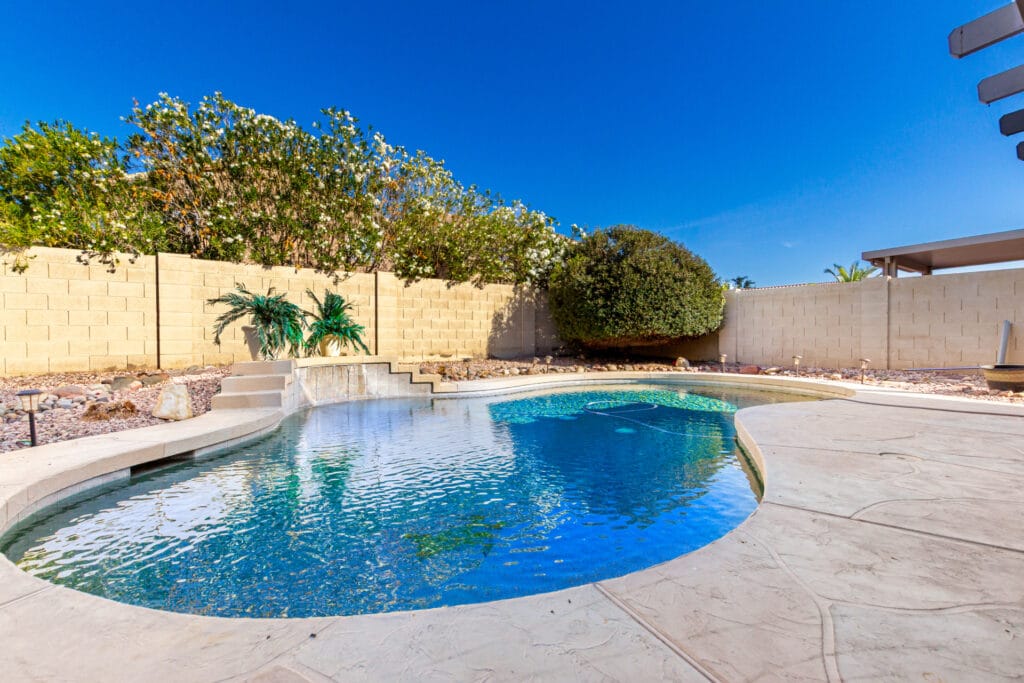
In Phoenix, a pool isn’t a luxury—it’s a lifestyle. You’re done with being hot from May through September. You want a sparkling pool, maybe a pebble-tec finish, a Baja shelf for the kids, and a covered patio where you can actually sit outside at 2 PM in July.
The Open Floor Plan
Your current home has that choppy 1990s layout with a formal living room no one uses and a closed-off kitchen. You want open concept—great room, kitchen island big enough for the kids to do homework, sightlines so you can watch them while you cook.
The Home Office
Not a corner of the bedroom. Not the dining room table. A real office with a door, good lighting, and space for monitors, bookshelves, and maybe a standing desk. Bonus points if it has a separate entrance for client meetings.
The Upgraded Kitchen
Quartz countertops (not that laminate from 2003). A gas range. A pantry you can actually walk into. An island with seating. Stainless appliances. Pendant lighting. The kind of kitchen where you actually want to cook, not just reheat takeout.
The Primary Suite
A real retreat. Separate from the kids’ rooms. Big enough for a king bed and seating area. Walk-in closet (or two). En-suite bathroom with a soaking tub, separate shower, double vanity. Maybe even access to the backyard.
The Outdoor Living Space
More than just a patio. Think extended covered outdoor living room with ceiling fans, maybe an outdoor kitchen or built-in BBQ, fire pit, and landscaping that doesn’t require constant maintenance. Desert landscaping done right.
The Right Neighborhood
Maybe you want top-rated schools in Gilbert or Chandler. Or the walkability and restaurants of Arcadia. The golf course communities in Scottsdale. The mountain views in North Phoenix or Anthem. The family-friendly vibe of Queen Creek. Location matters.
The Extra Space
Four bedrooms instead of three. A bonus room or loft. Three-car garage instead of two. Storage that doesn’t involve Tetris-ing boxes in a too-small garage. A yard big enough for a playset or garden.
Energy Efficiency and Smart Home Features
In Phoenix’s climate, you want newer HVAC, good insulation, solar panels (or at least solar-ready), smart thermostat, and windows that actually keep the heat out. Your current $400 summer electric bill? That could be cut in half with the right home.
Can You Actually Afford to Upgrade? Let’s Talk Numbers
This is the question that stops most people: “Can I actually afford to upgrade?”
Here’s the good news: Phoenix home values have increased significantly over the past few years. That starter home you bought in 2019 or 2020? It’s probably worth substantially more now. That equity you’ve built? That’s your down payment for your next home.
Here’s how the math typically works:
1. Calculate your current equity
Current home value minus what you still owe on your mortgage = your equity. For example:
- You bought for $350,000 in 2020
- Current market value: $475,000
- Remaining mortgage balance: $315,000
- Your equity: $160,000
2. Factor in selling costs
You’ll pay roughly 7-10% in selling costs (agent commissions, closing costs, etc.). So from that $160,000 equity:
- Selling costs (8%): ~$38,000
- Net proceeds: ~$122,000
3. Determine your upgrade budget
That $122,000 can be your down payment on your next home. If you put 20% down:
- You could afford a home up to $610,000
If you put 10% down:
- You could afford a home up to $1,220,000 (though your monthly payment would be higher)
The interest rate reality: Yes, rates are higher than they were in 2020-2021. But here’s what matters more: can you comfortably afford the monthly payment on a home that actually fits your needs? Run the numbers with a lender. You might be surprised.
The hidden costs to consider:
- Higher property taxes on a more expensive home
- Potentially higher HOA fees (if moving to a community with more amenities)
- Pool maintenance ($100-200/month)
- Larger home = higher utilities and maintenance
- Moving costs
But also consider the hidden costs of NOT upgrading: ongoing repairs on your current home, the opportunity cost of not enjoying the Phoenix lifestyle, and the frustration of living in a space that doesn’t work.
How to Make the Move: A Strategic Timeline
Ready to make the jump from starter home to dream home? Here’s a strategic timeline:
3-6 Months Before:
- Get a comparative market analysis: Find out what your current home is worth. This determines your equity and upgrade budget.
- Talk to a lender: Get pre-approved for your next home. Understand what you qualify for and what your monthly payment would be.
- Start casually browsing: Look at homes in your target neighborhoods and price range. Attend open houses. Get a feel for what’s available.
- Create your must-have list: What are your non-negotiables? Pool? Four bedrooms? Specific school district? Great home office? Write it down.
2-3 Months Before:
- Prep your current home for sale: Declutter, make minor repairs, consider a pre-listing inspection. You want it show-ready.
- Interview listing agents: Find someone who knows your neighborhood and has a proven track record of selling homes quickly and for top dollar.
- Intensify your home search: Start seriously looking. Save favorites. Get a sense of how quickly homes are selling in your target areas.
The Big Decision: Sell First or Buy First?
This is the million-dollar question. Here’s the truth: it depends on your situation.
Sell first if:
- You need your equity for the down payment
- You can’t afford two mortgages
- You want to be a stronger buyer (no home sale contingency)
- You’re not in a huge rush and can negotiate a rent-back agreement
Buy first if:
- You have significant savings for a down payment
- You can qualify for two mortgages temporarily
- Inventory is super tight in your target area
- You found THE perfect home and can’t risk losing it
The hybrid approach: List your home with a longer closing period (60+ days) and aggressively search during that time. Or negotiate a rent-back agreement that gives you 30-60 days post-closing to find your next home. Many Phoenix sellers use this strategy successfully.
What’s Hot in the Phoenix Upgrade Market Right Now
If you’re upgrading in Phoenix, here’s what’s trending and what buyers are willing to pay premium prices for:
- Pools (always): Homes with pools sell faster and for more money. Pebble-tec finishes, Baja shelves, and heated pools are especially desirable.
- Outdoor living spaces: Extended covered patios, outdoor kitchens, fire pits, and well-designed desert landscaping add serious value.
- Energy efficiency: Solar panels, newer HVAC systems, good insulation, and energy-efficient windows are huge selling points in Phoenix’s climate.
- Home offices: Dedicated office space with a door is no longer optional for many buyers. Bonus if it has good natural light and built-in shelving.
- Open floor plans: Great rooms, kitchen islands, and flowing layouts beat choppy, closed-off floor plans every time.
- Smart home features: Smart thermostats, doorbell cameras, automated lighting, and app-controlled pool systems appeal to tech-savvy buyers.
- Desirable school districts: Gilbert, Chandler, Scottsdale, and parts of Phoenix Unified with top-rated schools command premium prices.
- Low-maintenance landscaping: Beautiful desert landscaping with drip irrigation beats high-maintenance grass lawns.
Common Mistakes to Avoid When Upgrading
I’ve seen Phoenix homeowners make these mistakes when upgrading. Learn from them:
Mistake 1: Stretching Your Budget Too Far
Yes, you want your dream home. But if the monthly payment keeps you up at night or prevents you from enjoying life, you’ve gone too far. Leave room in your budget for vacations, savings, and unexpected expenses.
Mistake 2: Ignoring Resale Value
Even if this feels like your “forever home,” life happens. Buy in a desirable area with good schools and amenities. The most unique, personalized home might be hard to sell later.
Mistake 3: Focusing Only on Aesthetics
That gorgeous kitchen is lovely, but what about the roof? The HVAC? The foundation? Don’t let pretty finishes blind you to expensive deferred maintenance.
Mistake 4: Buying the Biggest House in the Neighborhood
You want to be in the middle or slightly above average for your neighborhood. The biggest, most expensive house on the block is harder to sell and appreciate.
Mistake 5: Not Planning for the Transition
Moving is stressful and expensive. Budget for movers, temporary housing if needed, storage, and the inevitable costs of settling into a new home (window treatments, landscaping touch-ups, etc.).
Mistake 6: Rushing the Decision
Just because you can afford to upgrade doesn’t mean you should jump at the first nice house you see. Take your time. Be selective. The right home is worth waiting for.
Your Home Should Grow With You
Here’s what I want you to remember: there’s no prize for staying in a home that doesn’t fit your life anymore.
Your starter home served its purpose. It got you into the market. It helped you build equity. Maybe it gave you a place to start your family or establish yourself in Phoenix. That’s valuable.
But now it’s time to move into a home that supports where you’re going, not where you’ve been.
That pool you’ve been dreaming about? It’s not frivolous—it’s three more months per year of outdoor living in Phoenix. That home office? It’s your mental health and productivity. That bigger kitchen? It’s where your family will gather for the next decade of memories.
You’ve worked hard. You’ve built equity. You’ve earned the right to live in a home you love, not just one you settled for.
The Phoenix real estate market is strong. Inventory is improving. Interest rates will fluctuate, but waiting for the “perfect” time means missing out on years of enjoying the home you actually want.
Take the first step. Find out what your current home is worth. Talk to a lender. Start looking at what’s out there. You might be closer to your dream home than you think.
Frequently Asked Questions About Upgrading Your Phoenix Home
How much equity do I need to upgrade to a better home in Phoenix?
Most homeowners need at least 10-20% equity in their current home to make upgrading feasible. This equity becomes your down payment on your next home. In Phoenix’s appreciating market, many homeowners who bought 3-5 years ago have substantial equity built up. Get a comparative market analysis to see exactly where you stand.
Should I sell my starter home first or buy my dream home first?
It depends on your financial situation. Selling first makes you a stronger buyer with no home sale contingency and ensures you have your down payment ready. Buying first works if you can afford two mortgages temporarily or have significant savings. Many Phoenix homeowners successfully use a hybrid approach with rent-back agreements or extended closing periods.
Is it worth upgrading even with higher interest rates?
While rates are higher than 2020-2021, the real question is whether the monthly payment fits your budget and whether living in a home that better serves your needs is worth it. You’re not buying an interest rate—you’re buying a lifestyle. Plus, you can always refinance later if rates drop. Waiting years for perfect conditions means missing out on years of enjoying your dream home.
What Phoenix neighborhoods are best for families upgrading from starter homes?
Popular upgrade destinations include Gilbert (excellent schools, family-friendly), Chandler (great schools, newer homes with pools), Queen Creek (newer construction, growing families), Scottsdale (upscale, golf communities), Arcadia (established, walkable, trendy), and Anthem (planned community, mountain views). Each offers different lifestyle benefits and price points.
How long does it typically take to upgrade homes in Phoenix?
From decision to moving into your new home, plan for 4-6 months minimum. This includes preparing and selling your current home (30-60 days on market plus closing), finding your new home (can vary widely based on inventory and your criteria), and closing on your purchase (30-45 days). Using a rent-back agreement can give you more flexibility in the timeline.
Will a pool really increase my home value in Phoenix?
Yes. In Phoenix, pools are highly desirable and add significant value—typically $30,000-$50,000 or more depending on size, features, and neighborhood. Homes with pools sell faster and often for higher prices than comparable homes without pools. In Phoenix’s climate, a pool isn’t a luxury amenity—it’s an expected feature for many buyers, especially in higher price ranges.