Selling a house in Phoenix is one of the biggest financial decisions you’ll ever make. If you’re sitting in your living room right now, looking around at the life you’ve built here, it’s completely normal to feel a mix of excitement and anxiety about what comes next. That knot in your stomach? You’re not alone.
Whether you’ve lived in your Arcadia bungalow for three years or raised a family in your Chandler home for two decades, the thought of selling can trigger some very real fears. But here’s the good news: understanding those fears and having a solid strategy is the first step to moving past them.
After working with hundreds of Valley homeowners, I’ve identified 10 proven strategies to help you overcome your fear of selling a house in Phoenix and move forward with confidence. Let’s dive in.
Tip 1: Identify Your Specific Fears
The first step to overcoming fear is naming it. What exactly are you afraid of? When selling a house in Phoenix, homeowners typically worry about one or more of these common concerns:
- Pricing incorrectly: In a market like Phoenix, where home values can shift with interest rates and seasonal demand, getting the price right feels high-stakes. Price too high and your home sits on the market; too low and you leave money on the table.
- Not finding a new home in time: With Phoenix’s competitive market and limited inventory in certain neighborhoods, the fear of being homeless between closing dates is real.
- Market timing anxiety: “What if the market crashes right after I sell?” Or conversely, “What if I sell now and values skyrocket next year?” This keeps many sellers paralyzed.
- The work and disruption: The thought of decluttering, staging, keeping the house show-ready, and dealing with last-minute showing requests while juggling work and family feels overwhelming.
- Making the wrong decision: This is the big one. The fear that you’ll regret this decision six months or six years from now.
These fears are valid. Acknowledging them is the first step. But they don’t have to stop you from moving forward with your life goals.
Tip 2: Reframe Your Mindset—Focus on What You’re Gaining
One of the most powerful shifts you can make when selling a house in Phoenix is changing how you think about it. Instead of focusing on what you’re losing—your established neighborhood, the kitchen you renovated, the backyard where your kids played—focus on what you’re gaining.
Are you moving closer to family? Upgrading to accommodate a growing household? Downsizing to a more manageable space for retirement? Relocating for an incredible job opportunity? Cashing in on your home’s equity to fund the next chapter? Explore larger Phoenix homes and start envisioning your next chapter.
Your home is a tool that serves your life—not the other way around. When your current home no longer aligns with where you’re headed, selling isn’t a loss. It’s a strategic move toward your goals.
Make a list of what you’ll gain from this move. Keep it visible. When fear creeps in, remind yourself why you’re doing this.
Tip 3: Educate Yourself About the Phoenix Real Estate Market
Fear often comes from uncertainty. The more you understand about the current Phoenix real estate market, the more confident you’ll feel about selling your house in Phoenix.

Phoenix has consistently been one of the strongest real estate markets in the country. Yes, we’ve seen some inventory increases and market stabilization compared to the frenzy of 2021-2022, but that doesn’t mean your home won’t sell. It just means you need the right strategy and realistic expectations.
Do your homework:
- Look at recent comparable sales in your specific neighborhood—not just Phoenix in general. There’s a big difference between selling in Ahwatukee versus selling in North Phoenix.
- Understand current days on market trends for your area. How long are similar homes taking to sell?
- Talk to a realtor in Arizona who knows your micro-market inside and out. Not all agents are created equal—find one with proven results in your specific neighborhood.
- Consider seasonal patterns. Phoenix has unique selling seasons, with snowbird demand impacting winter sales and a slowdown during the intense summer heat.
When you have data instead of assumptions, you can make informed decisions instead of fear-based ones. Knowledge is power when selling home in Phoenix.
Tip 4: Get a Pre-Listing Home Inspection
One of the smartest things you can do before selling a house in Phoenix is to get a pre-listing inspection. This means hiring a professional home inspector to evaluate your property before you list it on the market.
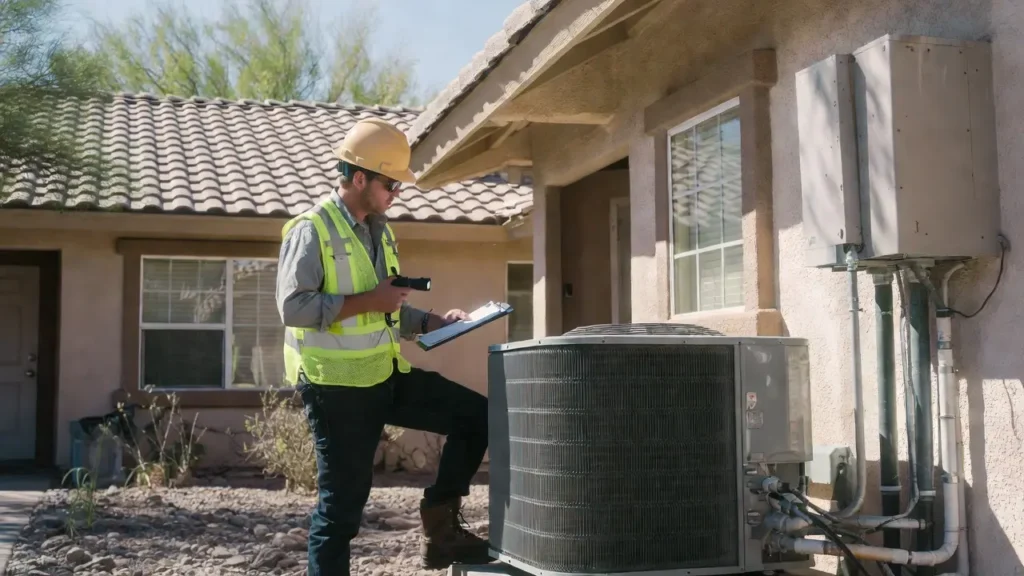
Why this reduces fear:
- No surprises: Finding out about that wonky HVAC system, roof issue, or foundation crack before a buyer does gives you control.
- You choose how to handle it: Fix it, price accordingly, or simply disclose it upfront with documentation.
- Fewer deal-killers: Buyers are less likely to walk away or demand massive concessions when issues are already disclosed and priced in.
- Faster closing: Less back-and-forth negotiation over inspection items means a smoother transaction.
In the Phoenix market, where monsoon damage, HVAC issues, and roof concerns are common, a pre-listing inspection is one of the best investments you can make. It typically costs $300-500 but can save you thousands in negotiations or prevent deals from falling apart.
Tip 5: Partner with a Local Phoenix Real Estate Expert
This isn’t the time to sell a house in Phoenix without a realtor or to go with your cousin’s friend who just got their license. You want someone who knows Phoenix neighborhoods, has a proven marketing strategy, and can negotiate effectively.
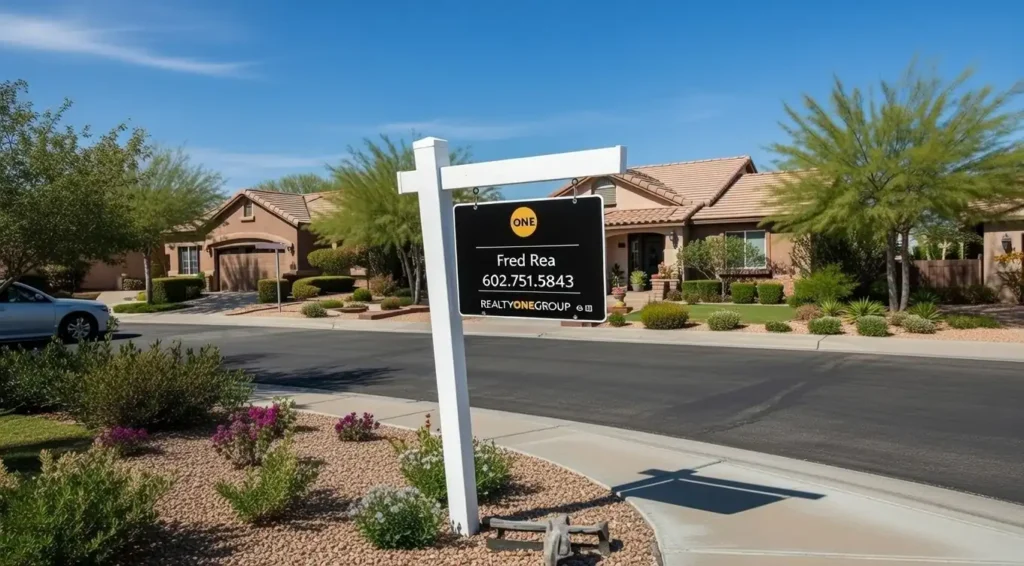
What a skilled realtor in Arizona brings to the table:
- Accurate pricing strategy: They have access to the most current market data and understand what potential buyers are actually willing to pay in your area.
- Professional marketing: Professional photos, virtual tours, MLS listings, social media promotion, and targeted advertising to attract qualified buyers.
- Negotiation expertise: They handle offers, counteroffers, inspection negotiations, and closing details so you don’t have to navigate complex paperwork for selling on your own.
- Network and resources: Connections to inspectors, contractors, stagers, and other professionals who can help prepare your home.
- Emotional buffer: They handle difficult conversations and keep transactions professional, which is invaluable during a stressful time to sell a house.
A great agent is worth their commission because they help you avoid costly mistakes, get top dollar, and reduce stress. When interviewing agents, ask about their specific experience selling homes in your Phoenix neighborhood, their average days on market, and their marketing plan for your property.
What about selling without a realtor (FSBO)? While some Phoenix homeowners successfully sell a house without a realtor to save on commission, it requires significant time, marketing knowledge, negotiation skills, and understanding of Arizona real estate law. Most sellers find the stress and potential for costly mistakes outweigh the commission savings.
Ready to work with an experienced Phoenix real estate agent? Contact us today for a free consultation and comparative market analysis.
Tip 6: Price Your Home Strategically from Day One
In the Phoenix real estate market, overpricing is one of the biggest mistakes sellers make—and one of the primary reasons homes sit on the market and sellers panic.
Here’s the reality:
- Homes priced right attract multiple showings quickly: Often within the first week, sometimes resulting in multiple offers.
- Overpriced homes sit: Then you’re forced to reduce—which makes buyers wonder what’s wrong with the property. “Why hasn’t this sold? What do they know that I don’t?”
- Each price reduction is a public admission: Buyers see the price history and often lowball, knowing you’re getting desperate.
How to price strategically:
- Get a comparative market analysis (CMA) from your agent showing what similar Phoenix houses have actually sold for—not just listed for
- Consider current market conditions: Is inventory high or low in your area? Are interest rates affecting buyer demand?
- Be honest about your home’s condition compared to recently sold comps
- Price at or slightly below market value to generate urgency and potential multiple offers
The best time to sell a house in Phoenix at top dollar is within the first two weeks on market. Price it right from the start, and you’ll have far less to fear about it sitting unsold.
Bonus Tip: Get Your Home Value – Instantly!
Enter your address below to receive a free, accurate estimate of your home’s current market value.
Tip 7: Protect Yourself with Smart Contingencies and Timing
One of the biggest fears when selling a house in Phoenix is: “What if I sell before I find my next place?” This is a legitimate concern in a competitive market with limited inventory.
Here are strategies to protect yourself:
- Negotiate a rent-back agreement: This allows you to stay in your Phoenix home for a period after closing (typically 30-60 days) while you search for your next property. You essentially become a tenant of the buyer temporarily. In the current Phoenix market, many buyers are willing to accommodate this.
- Make your sale contingent on finding suitable housing: Yes, this might make your offer slightly less attractive to buyers, but it’s better than being stuck in a hotel or rushed into a bad purchase decision.
- Get pre-approved for your next mortgage before listing: Talk to a lender about your next purchase early. Getting pre-approved gives you confidence that you’ll qualify for your next home and helps you set a realistic price range for your search.
- Start house hunting before you list: Start house hunting before you list. Browse available Phoenix homes to get a feel for what’s in your target area and price range.
- Have a backup plan: Research short-term housing options (extended stay hotels, corporate housing, short-term rentals) just in case. Knowing you have a safety net reduces anxiety.
Work with your realtor in Arizona to structure the deal in a way that gives you breathing room. Smart timing and contingencies can eliminate one of your biggest fears about the transition.
Tip 8: Calculate the True Cost of NOT Selling
While you’re weighing the risks of selling a house in Phoenix, don’t forget to consider the cost of staying put when your home no longer serves you.
Ask yourself:
- Are you turning down job opportunities because you’re afraid to relocate?
- Are you missing out on being closer to aging parents or growing grandkids?
- Is your Phoenix house too large, too small, or too expensive to maintain for your current lifestyle?
- Are you locked into a mortgage rate or payment structure that made sense years ago but doesn’t fit your financial goals today?
- Are you watching your home equity sit idle when it could be working harder for you elsewhere—whether in a better property, investments, or funding retirement?
- Is the fear of change keeping you from the life you actually want to be living?
Sometimes the biggest risk isn’t making a change—it’s staying stuck. Do an honest assessment of what staying in your current home is costing you in opportunities, quality of life, and financial flexibility.
When you calculate the real cost of not selling, the fear of selling often becomes less intimidating than the cost of inaction.
Tip 9: Accept That Perfect Timing Doesn’t Exist
Here’s a little secret about selling a house in Phoenix—or anywhere else: there’s rarely one perfect moment. There are different decisions with different outcomes, and most of them work out fine.
Maybe you’ll sell and the Phoenix real estate market will go up another 5% next year. Or maybe you’ll sell and it’ll dip 3%. Either way, if selling allows you to achieve your life goals—whether that’s relocating for family, accessing your equity, or getting into a home that better suits your needs—then it’s the right decision for you right now.
Real estate is cyclical. Phoenix has seen incredible growth, corrections, and growth again over the decades. Trying to time the absolute peak is like trying to catch lightning in a bottle. Even professional investors and economists can’t predict market tops and bottoms with certainty.
Instead of trying to time the market perfectly, ask:
- Does selling align with my life timeline and goals right now?
- Am I in a reasonable market window based on recent sales data?
- Will waiting another 6-12 months significantly change my situation?
- What is the opportunity cost of waiting for “perfect” conditions that may never come?
Focus on whether selling aligns with your life, not on predicting future market movements. The best time to sell a house is when it serves your broader life goals and the market conditions are reasonable—not necessarily when they’re theoretically optimal.
Give yourself permission to make a good decision instead of obsessing over the perfect one.
Tip 10: Start Small—Gather Information Without Commitment
You don’t have to commit to selling a house in Phoenix tomorrow. But you can start learning what your options are today.

Take these low-pressure first steps:
- Request a comparative market analysis (CMA): This free report from a local realtor in Arizona shows what your home might be worth based on recent sales of similar properties. No obligation—just information.
- Interview 2-3 local agents: Have conversations to understand the selling process, timeline, and what they’d recommend for your specific Phoenix house. Ask questions. See who you click with.
- Attend open houses in your target area: Get a feel for what’s available, what things cost, and whether the neighborhoods you’re considering are really right for you.
- Run the numbers with a financial advisor: See how selling your Phoenix home would impact your overall financial picture—taxes, equity, new mortgage, etc.
- Read about the selling process: Educate yourself on the paperwork for selling, timeline, costs, and what to expect at each stage.
Knowledge reduces fear. The more you know, the more empowered you’ll feel to make a decision that’s right for you—whether that’s selling now, waiting six months, or staying put.
Often, people discover that what they feared was based on assumptions that weren’t true. Maybe the selling process is simpler than they thought. Maybe their home is worth more than expected. Maybe there are more options available than they realized.
Information is free. Gathering it doesn’t commit you to anything. But it puts you in the driver’s seat of your decision. Ready to take that first step? Get in touch with us for a no-obligation discussion about your home selling goals.
Your Fear Is Normal. Your Next Move Is Yours.
Selling a house in Phoenix is a big deal. It should feel significant. But fear shouldn’t be the deciding factor.
Instead of asking, “What if I’m making a mistake?” try asking:
- “What do I really want for my life right now?”
- “Does this home still serve those goals?”
- “What would it look like to move forward with confidence instead of fear?”
The Phoenix real estate market will continue to evolve. Interest rates will fluctuate. Neighborhoods will change. But your life is happening right now—not when conditions are theoretically perfect.
Use these 10 tips as your roadmap. Identify your fears, educate yourself, partner with professionals, protect yourself with smart strategies, and take that first small step toward gathering information.
You’ve got this. And when you’re ready to take the next step in selling your Phoenix home, we’re here to help.
Frequently Asked Questions About Selling a House in Phoenix
What’s the best time of year to sell a house in Phoenix?
Winter and early spring (January through April) are typically the strongest selling seasons in the Phoenix real estate market due to snowbird buyers and people relocating before the intense summer heat. However, well-priced homes can sell year-round.
How long does it take to sell a house in Phoenix?
Average days on market varies by neighborhood, price point, and current market conditions, but well-priced homes in desirable Phoenix areas typically sell within 30-60 days. Homes that sit longer than 60 days are usually overpriced or have condition issues.
Do I need to make repairs before selling my Phoenix home?
Not always. A pre-listing inspection helps you decide what’s worth fixing versus pricing accordingly. Major issues like HVAC problems, roof damage, or foundation concerns should typically be addressed or disclosed, but cosmetic issues can often be reflected in the price rather than fixed.
Can I sell my Phoenix home and rent it back from the buyer?
es, rent-back agreements (also called leaseback or seller occupancy agreements) are common in the Phoenix market and give you time to find your next home after closing. These typically range from 30-60 days but can be negotiated based on buyer willingness.
Should I sell without a real estate agent in Phoenix to save money?
While selling without an agent can save commission costs, it requires significant time, marketing expertise, negotiation skills, and knowledge of Arizona real estate law and the paperwork for selling. Most sellers find that a skilled realtor in Arizona more than earns their commission through better pricing, marketing, and negotiation that results in a higher net sale price and smoother transaction.
Should I find my next home before selling?
Many sellers prefer to browse available homes before listing to understand current inventory and pricing in their target neighborhoods.